
Why we chose Slovenia for a ski trip
We were not travelling to Slovenia in search of perfect powder, enormous ski terrain or professional-level freestyle parks. We wanted a winter journey that offered more than the slopes.
The previous winter had taken us to Gudauri in Georgia, where snowboarding could be combined with ancient churches, mountain roads and Tbilisi. Slovenia promised a similar kind of variety in a much more compact country.
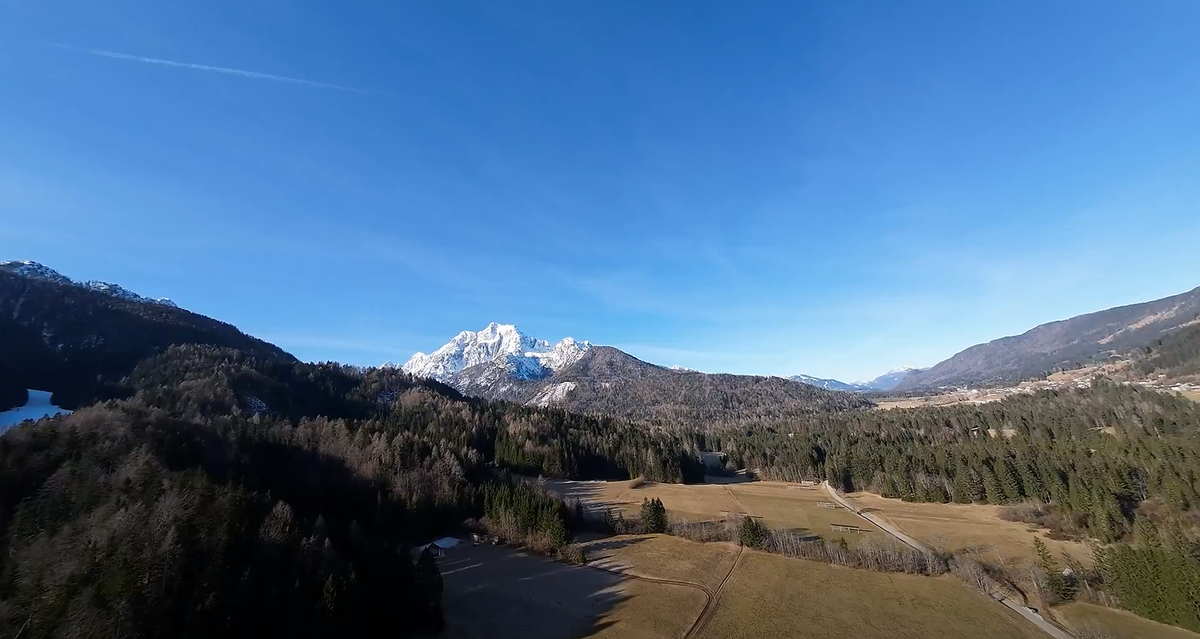
Kranjska Gora lies in Slovenia’s northwestern corner, close to both Austria and Italy. It is the country’s best-known ski destination and regularly hosts international competition. More importantly for us, it offered access to Lake Bled, Ljubljana and Postojna Cave without changing accommodation.
That combination became the real reason to go.
Flying to Zagreb instead of Ljubljana
Our first practical lesson came before we reached Slovenia. Before booking a flight to Ljubljana, it is worth comparing fares to Zagreb. The Croatian capital is close enough to make the transfer manageable by rental car, and the price difference may justify adding another city to the route.
We flew from Belgium to Zagreb, collected our car at the airport and drove towards Kranjska Gora. The drive did not unfold quite as planned. Because we travelled after dark, we missed the mountain scenery we had expected to enjoy. At some point, we also took a route that led us through a long tunnel and briefly into Austria.
Eventually, we found our way back towards Slovenia. As we rounded the final bend into Kranjska Gora, the illuminated slopes appeared against the dark mountain. After the flight and the wrong turn, they looked almost impossible to resist.
Arriving in Kranjska Gora
We had booked an apartment with a proper kitchen and planned to prepare some of our own meals. There was one problem: we arrived on a Saturday evening and discovered that the food shops were closed until Monday morning.
The kitchen was ready. The ingredients were not.
It was a small planning error, but exactly the kind that matters after a long travel day. Our apartment was otherwise well positioned: around five hundred metres from the lifts, with a separate bedroom and enough space for the three of us.
An honest review of skiing in Kranjska Gora
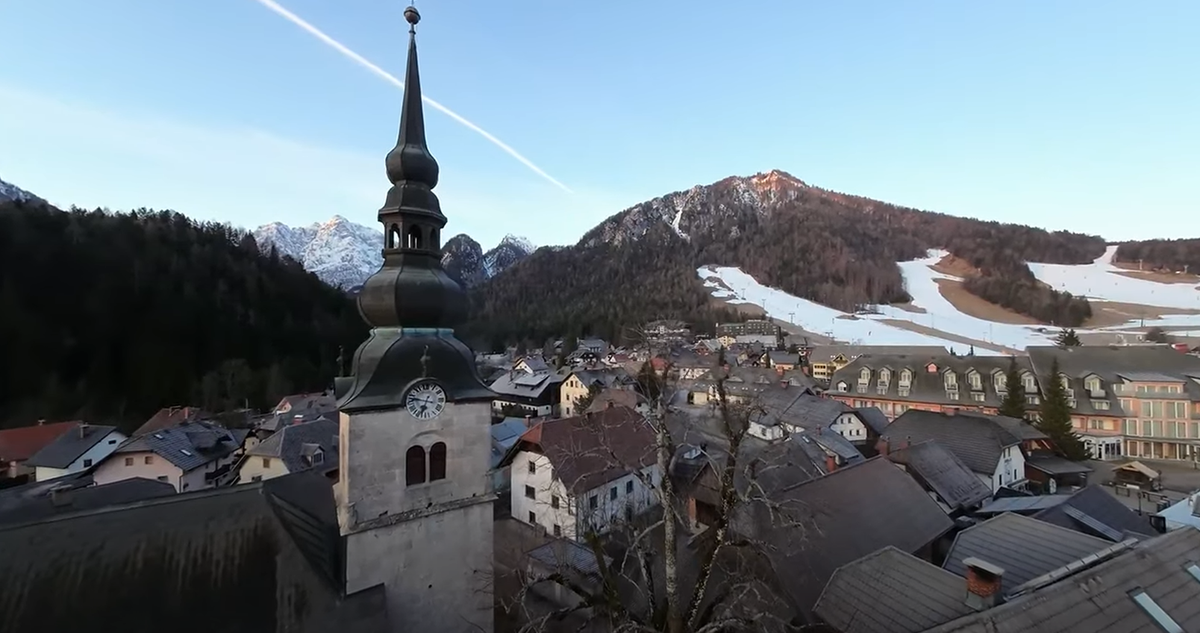
The ski area is divided into three main parts: Zelenci, Podkoren and Kranjska Gora.
Zelenci was the smallest section. It had a few easier pistes, but the lifts felt dated and the surface was extremely hard during our visit — a fall on that kind of snow leaves evidence. In my case, it left a substantial bruise.
Podkoren was the most demanding part of the area. Its steepest slopes reach gradients associated with international competition, and one section is used for World Cup racing.
The main Kranjska Gora section was larger and more accessible. Its blue and red pistes worked well for beginners and intermediate riders, and there were several places to stop for food or drinks. It was also by far the busiest area and where we spent most of our time.
The resort sits only a little above eight hundred metres. Even though we visited in early February, it became obvious how dependent the area was on artificial snow. Natural conditions were weak during our stay, off-piste riding was not an option, and the advertised fun park was not operating.
We still had three enjoyable days on the mountain. The limitations were real, but they did not ruin the trip because the journey was never built around skiing alone.
What the ski holiday cost
Price was one of Slovenia’s strongest arguments.
Cost summary
- Five-day ski pass (one adult, two teenagers)
- €434
- Apartment (six nights)
- €680
- Restaurant dinner
- €34
- Soft drink near the lift
- €3.50
- Rental car (eight days, fuel and vignettes)
- €300
These figures reflect our own trip and should not be treated as current prices. They do, however, explain why Slovenia can be attractive to families or mixed-interest groups. Accommodation, lift access and everyday food costs were considerably more manageable than the amounts often associated with France or Switzerland.
Hiking above Lake Bled
After three full days on the mountain, we exchanged snowboard boots for hiking shoes.
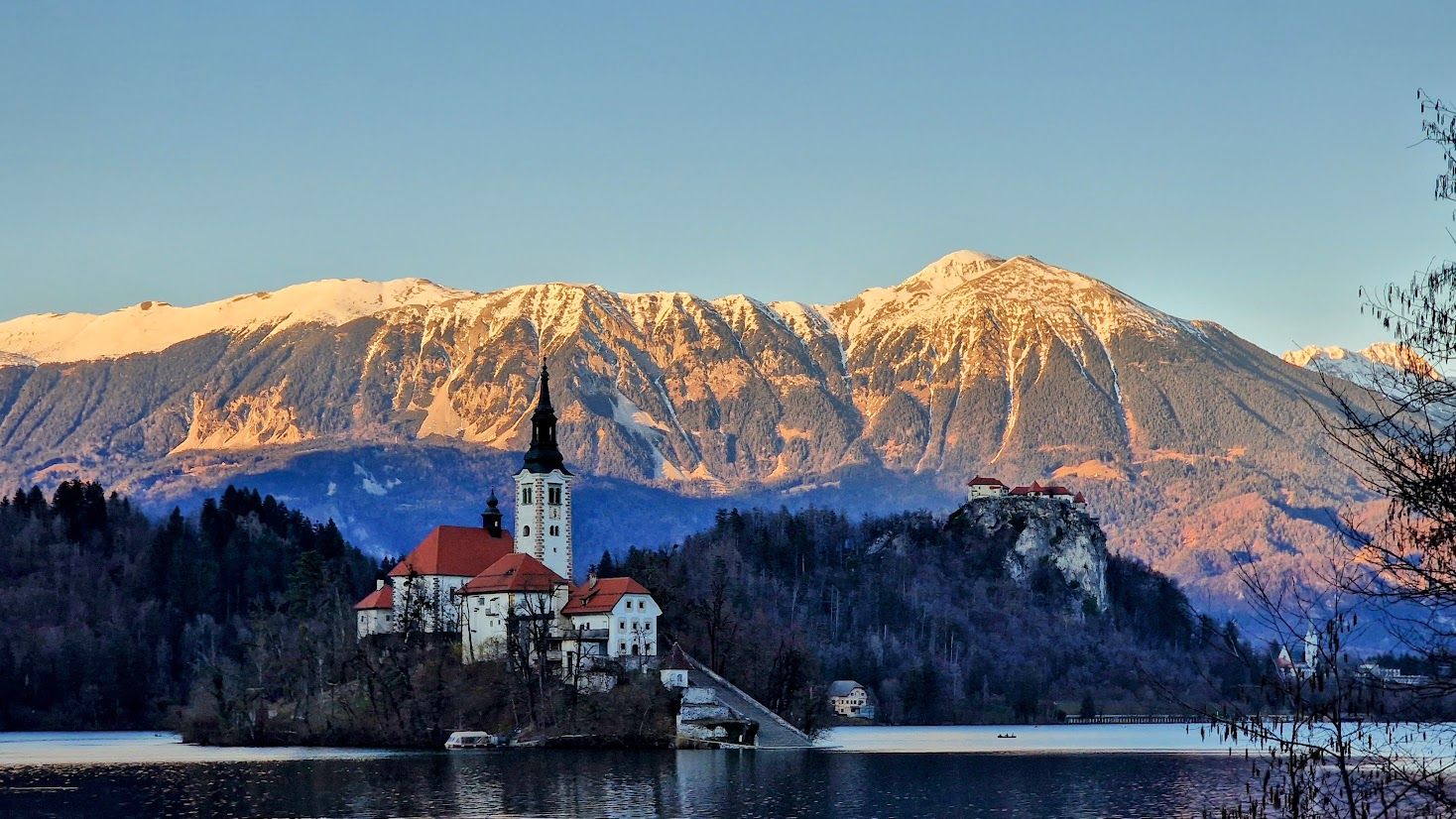
Lake Bled is one of Slovenia’s most photographed places. The island, the church, the cliffside castle and the Julian Alps appear in almost every visual introduction to the country. The familiar photographs do not show the effort required to reach the viewpoints above the lake after three days of snowboarding.
We followed a route connecting Ojstrica, Velika Osojnica and Mala Osojnica. The hike was not extreme, but our legs were already tired. As we climbed, the lake gradually appeared beneath us, revealing the island and surrounding mountains from increasingly dramatic angles.
The views earned every step. By the time we returned to the shore, the sun was setting and the sky had begun to change colour. We decided immediately that Lake Bled deserved another visit the following day.
Bled Castle and the winter lakeside walk
The next morning began on the slopes. Later, we drove back to Bled.
Our first stop was Bled Castle, positioned high above the water. From the cliff, we could see the still lake, the island church and the snow-covered mountains beyond it.
After the castle, we walked the full circuit around the lake — approximately six kilometres and almost entirely flat. In winter, it was also remarkably quiet. There were no large tour groups competing for the same viewpoint. For much of the walk, we heard little more than our own footsteps and the occasional movement of ice near the shoreline.
This was not the crowded summer version of Lake Bled seen across social media. For us, it was better.
A short visit to Ljubljana
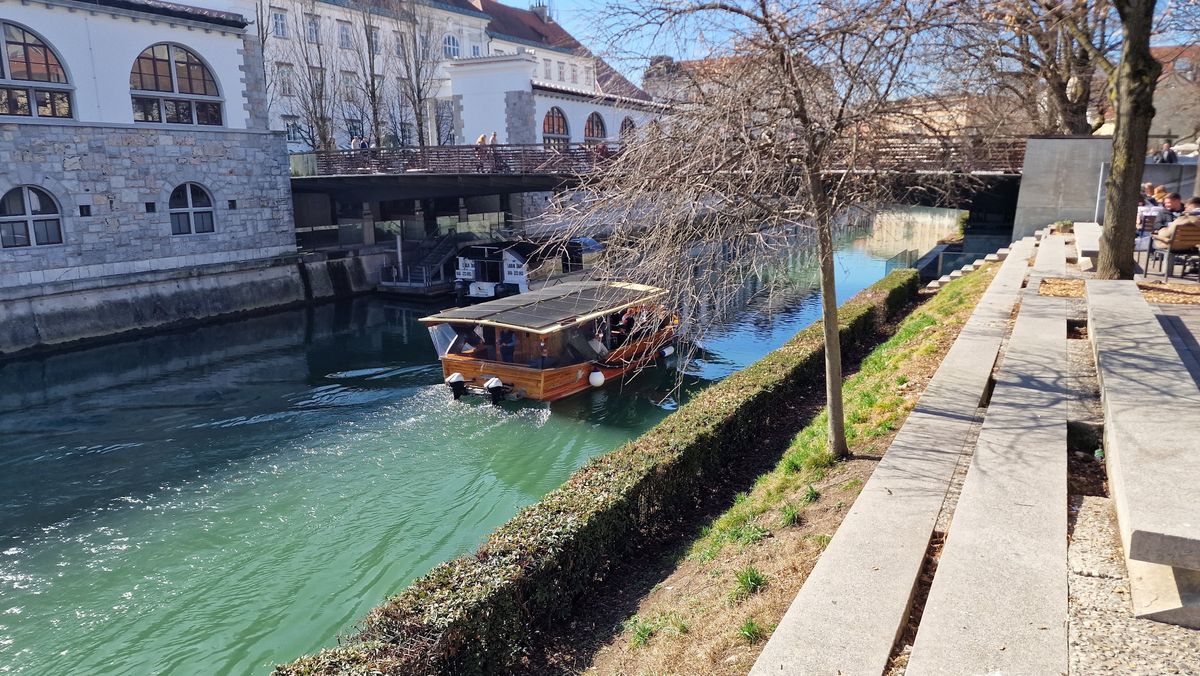
On our final full day, we drove to Ljubljana. The Slovenian capital is compact, walkable and immediately appealing. We followed the Ljubljanica River, crossed the Triple Bridge and moved through streets whose scale felt relaxed after the ski resort and mountain roads.
Our visit was too short to become a full city experience. We had time for an extended lunch, and chose Nebotičnik, an Art Deco skyscraper completed in the 1930s. The restaurant near the top offered a panoramic view across the city: the castle on its hill, the historic centre below and the Alps in the distance. It may have been the best lunch view we had ever had.
Ljubljana deserved more time. Postojna was waiting.
Taking the train into Postojna Cave
From Ljubljana, we drove towards Postojna. Then we drove into a hill.
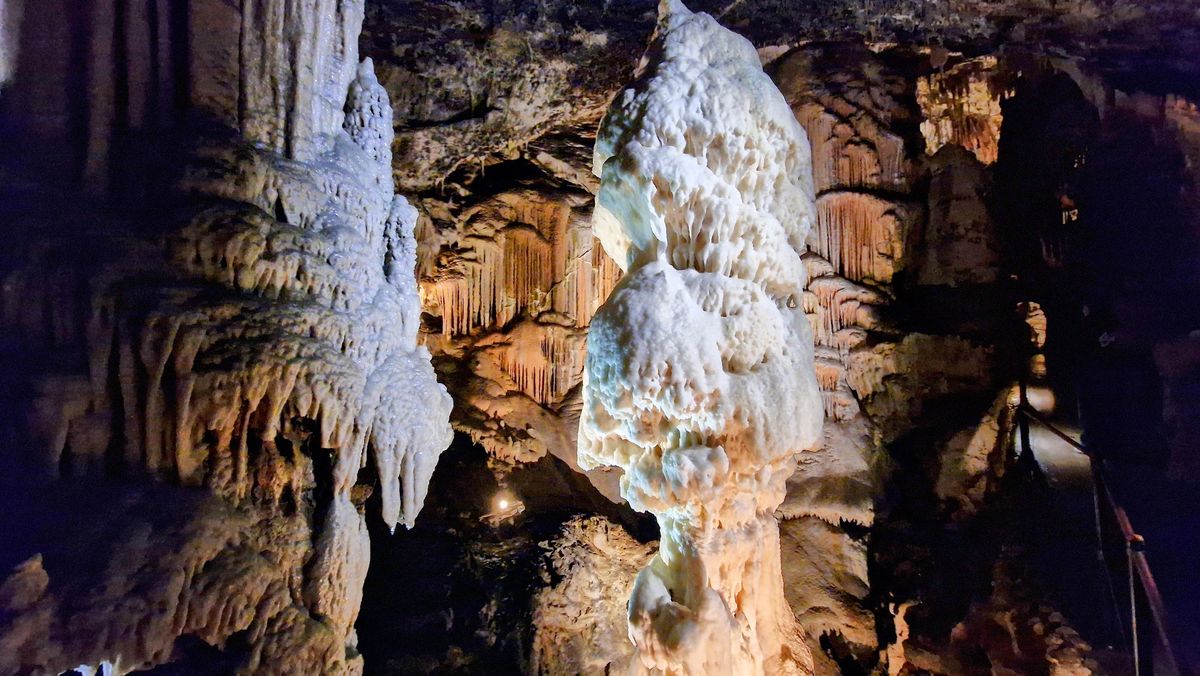
The Postojna experience begins with an underground train. It carries visitors for roughly two kilometres before the walking section starts. The cave system extends through a vast network of passages, galleries and chambers formed over immense periods of time. Inside, scale becomes difficult to judge — spaces open suddenly, formations appear under controlled light and the route feels increasingly detached from the landscape above.
Then there is the olm. The pale, blind cave animal is sometimes called the human fish or baby dragon. It is adapted to permanent darkness and looks like a creature invented for a fantasy story. Photography was not permitted inside during our visit, so we responded by photographing a photograph in the gift shop.
The tour ended in the Concert Hall, an enormous underground chamber used for actual performances. We had started the day on snowboards. We ended it around fifty metres underground in one of the most unusual concert spaces we had ever seen.
Who should choose Slovenia for a ski holiday?
Slovenia is not the answer for every winter traveller. Experienced skiers and snowboarders searching for large interconnected terrain, deep natural snow and major off-piste opportunities will probably find stronger options in France, Austria, Italy or Switzerland. That is not a criticism — it is a matter of choosing the right destination for the right journey.
Kranjska Gora makes more sense for beginners and intermediate riders, families with different interests, travellers who become restless after several consecutive ski days, visitors who value excursions as much as slope kilometres, and travellers seeking a more affordable winter trip.
The ski area alone did not make Slovenia exceptional. The combination did.
Why Slovenia stayed with us
Could we snowboard in the morning, hike above a fairytale lake in the afternoon and travel into an underground world before the journey ended?
Yes.
Slovenia did not offer the largest mountain or the deepest snow. It offered something more valuable to us: a winter trip that kept changing shape. The pistes brought us there. Lake Bled, Ljubljana and Postojna turned it into a journey.