
Accra did not wait politely for us to adjust.
The city arrived through horns, heat, roadside vendors and traffic that seemed motionless while somehow continuing to flow. Modern buildings and advertising boards rose above damaged pavements. Gated communities stood close to open drains. Between those contrasts, daily life continued at full speed.
Accra was never easy. It was always present.
Staying at Cocktails and Dreams
Our base was a hotel called Cocktails and Dreams.
Breakfast was unconventional. Anyone who wanted French fries first thing in the morning was well served. Anyone hoping for fruit, fibre or something green had fewer options.
Our first room stood beside a water pump that seemed capable of supplying the entire city. It ran continuously. We filmed it. We heard it. Then we moved.
The Wi-Fi technically existed, but remained slow and unreliable. The pool was excellent, and the staff were genuinely kind and helpful. Kind staff compensate for a surprising amount when sleep is limited and breakfast contains fries.
Practical details
- Rooms 102 and 103
- Affected by the nearby water pump
- Wi-Fi
- Unreliable
- Pool
- A strong feature
- Staff
- Helpful
Makola Market and the filming incident
Makola Market felt less like a single market than a living system. Thousands of vendors and customers filled streets and narrow passages. Goods, movement and sound occupied almost every available space.
We were recording with a 360-degree camera when two plainclothes police officers stopped us. One behaved aggressively, grabbed the camera and raised his voice. The other remained calmer. A tense discussion followed about filming and whether permission was required.
Eventually, we paid for what was described as a permit. The atmosphere changed immediately — the confrontation ended, smiles returned and we were allowed to continue.
We could not independently determine the formal basis of what happened. It was simply our experience on that day.
Understanding Ghana through its museums
After Makola, we needed somewhere calmer.
The National Museum of Ghana gave us space to place the journey in a wider context. It connected cultural traditions, historic kingdoms, colonialism, resistance and independence.
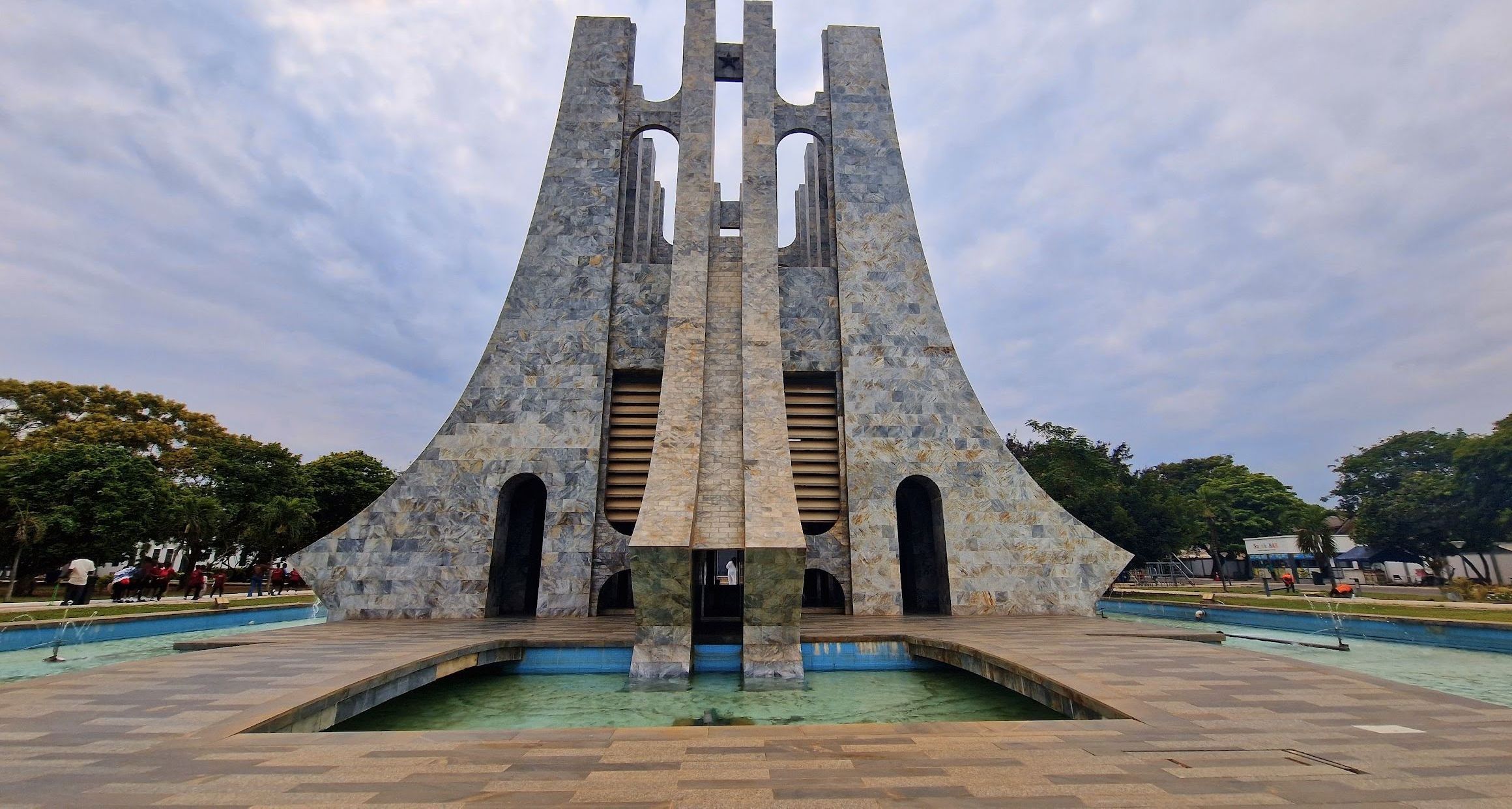
The Kwame Nkrumah Memorial added another layer. Nkrumah’s role in Ghana’s independence made the memorial central to understanding the country’s modern identity.
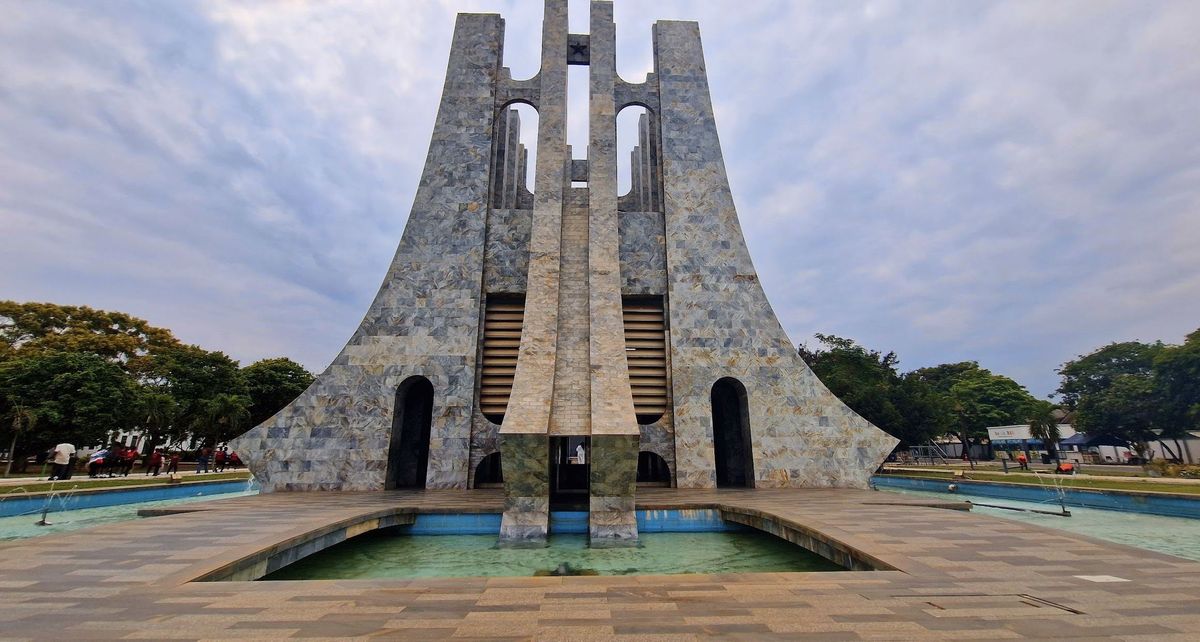
These visits connected Accra to the coast. The castles, the independence movement and the modern capital were not separate stories — they belonged to the same history.
Independence Square and the Black Star Gate
At Independence Square, we climbed the Black Star Gate. From above, the enormous ceremonial square stretched out on one side and the national football stadium on the other.
The view offered another version of Accra. Makola had shown density, improvisation and daily commerce. Independence Square presented national identity on a monumental scale. Pride, politics and history were built into the concrete.
The Arts Centre and Accra Mall
The Arts Centre was not a place for relaxed browsing. Shopkeepers competed for our attention, each trying to guide us into a stall. We looked at carvings and souvenirs and eventually chose a small ebony box. Our guide helped negotiate the price.
For visitors who enjoy bargaining, the exchange may form part of the experience. For others, it may feel exhausting.
Accra Mall offered the opposite atmosphere. It was smaller than expected, but clean, modern and comparatively quiet. After Makola and the Arts Centre, the calm felt almost unnatural.
The contrast belonged to the city. Accra contained pressure and stillness, wealth and poverty, modern development and visible infrastructure problems. It refused to become one simple thing.
Who Accra is for
Accra is not necessarily the part of Ghana that will charm every visitor. It is valuable for travellers who want to understand the country beyond beaches, castles and landscapes — especially those interested in contemporary urban Ghana, independence history, markets and everyday commerce, museums and national monuments, and the contrast between formal and informal city life.
Not every destination exists to make travel easy. Some places force you to pay attention.
Planning a similar visit
What Accra left with us
Accra never became comfortable. That was not the same as saying it lacked value.
The city challenged us, frustrated us and repeatedly exposed contrasts we could not neatly resolve. It did not charm us in the way Lake Volta or the Volta hills did.
It shook us awake. That may have been more important.