
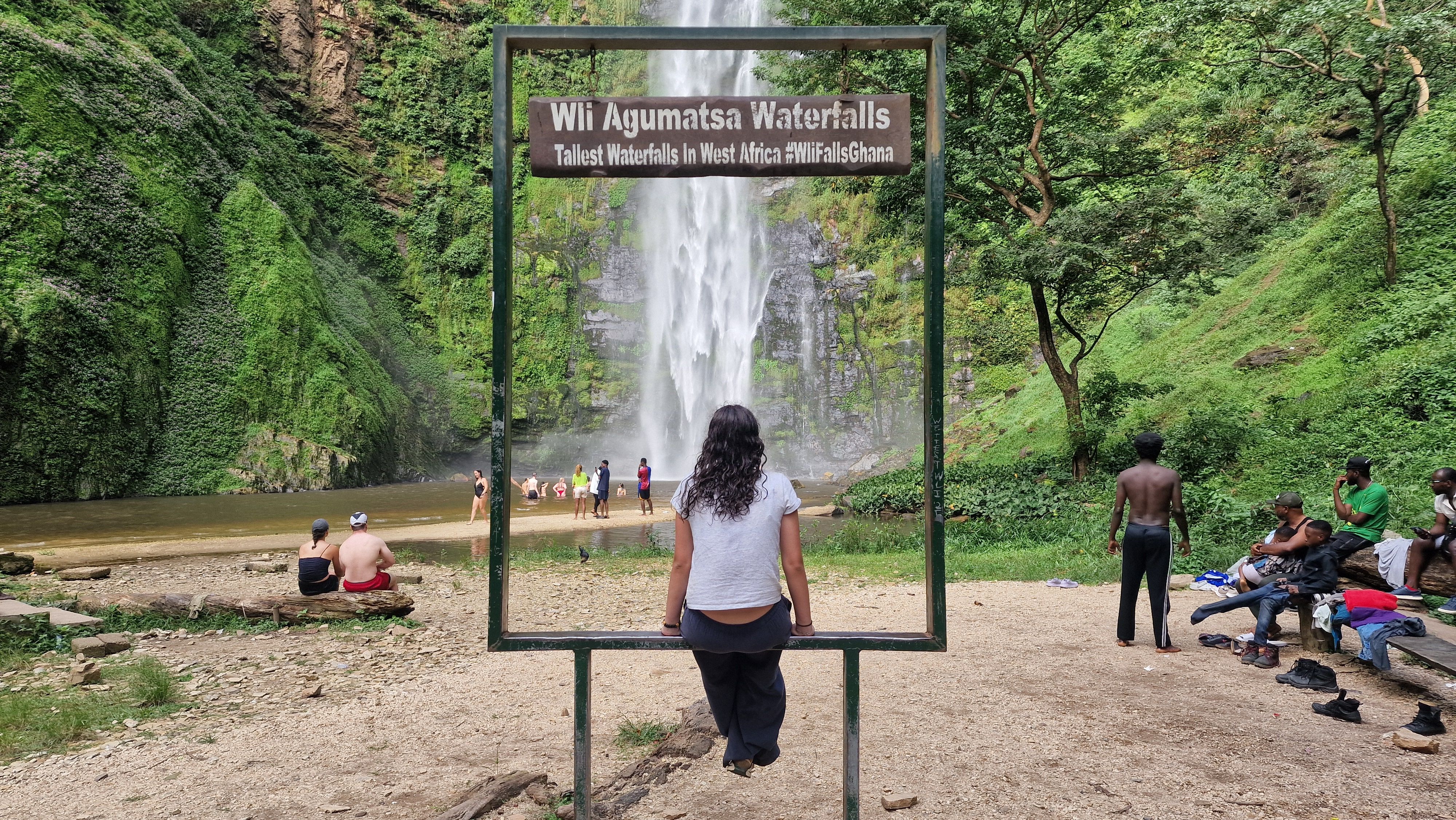
We left the coast behind and travelled northeast. The roads became more winding, the hills steeper and the landscape greener. After Accra and the coastal route, it felt as though Ghana had lowered the volume.
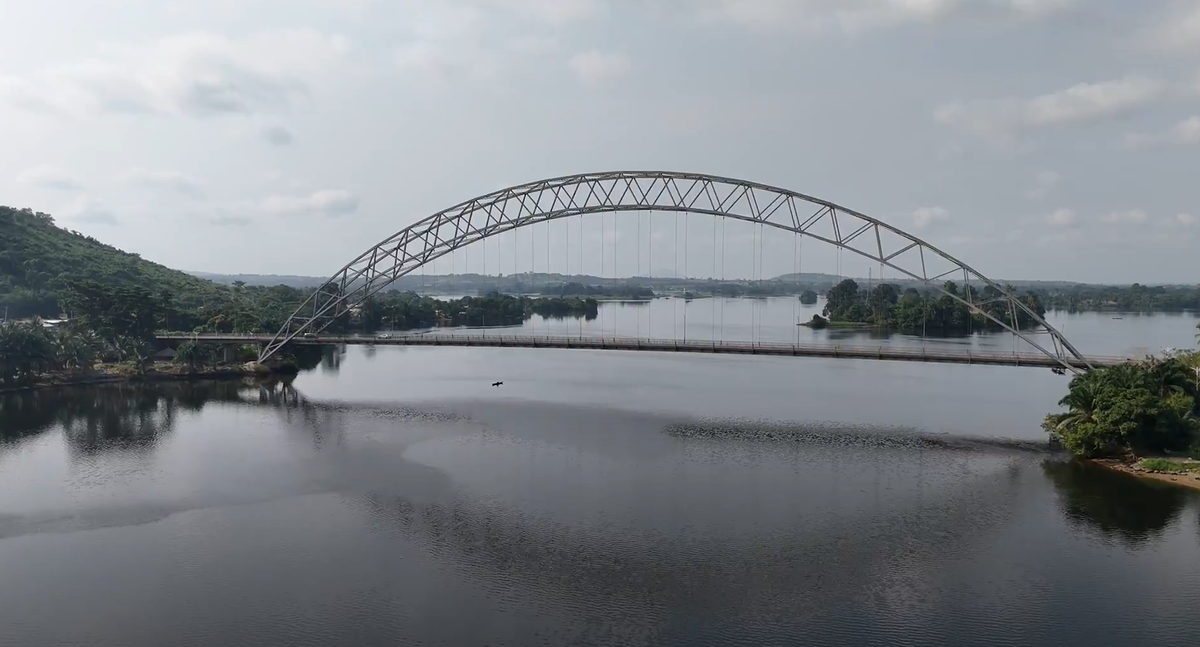
We stopped for breakfast near the Adomi Bridge, looking across the Volta River before continuing into the hills. Beyond the bridge, the journey became considerably more physical.
Climbing Mount Afadjato
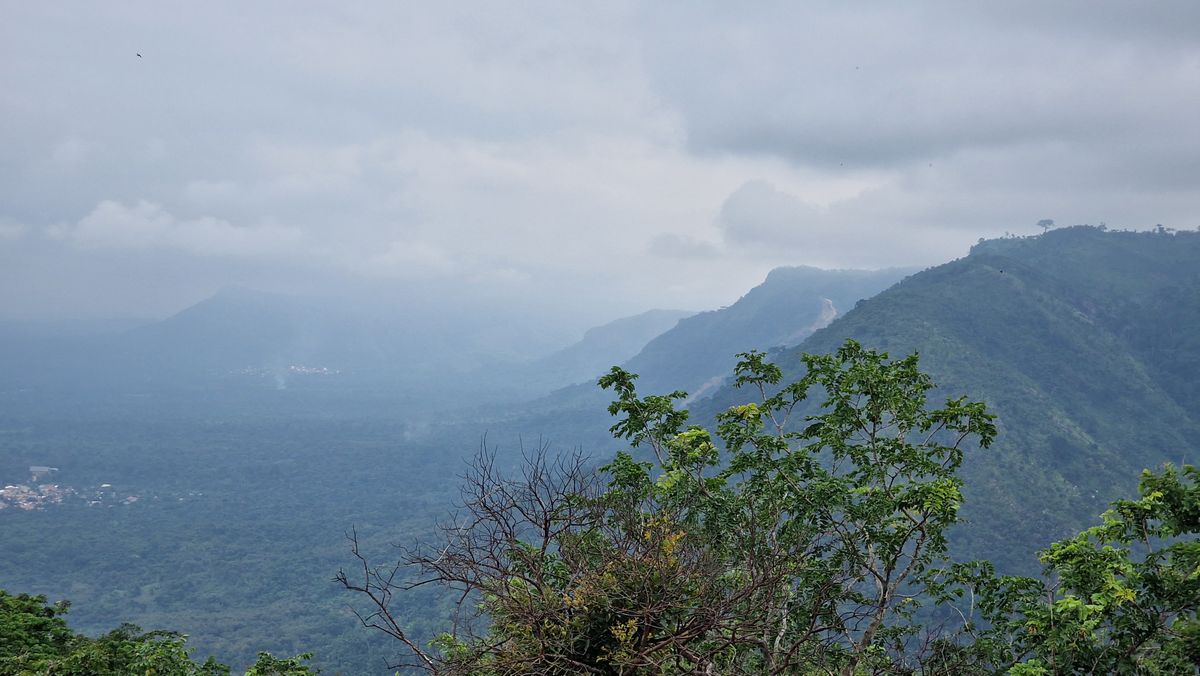
The Mount Afadjato trail started gently enough. That did not last.
Tree roots became handholds. Rocks became steps. The climb turned steep and relentless almost immediately.
We stopped repeatedly to admire the view. In reality, we needed to breathe.
Lauren continued upward with uncomfortable ease. I followed behind, trying not to make the struggling-father dynamic too obvious.
The view from the summit rewarded the effort. The crowd did not — we had reached the top on a popular day, and the quiet mountain moment we imagined was shared with many other visitors.
Recovering at Wli Waterfalls
From the mountain, we continued to Wli Waterfalls. The rainforest atmosphere was cooler, and the sound of the falling water grew louder as we approached.
After the heat and effort of Mount Afadjato, the pool beneath the falls felt restorative. We entered the water and let the cold do its work. The closer we moved to the waterfall, the stronger the spray became. For a while, fatigue disappeared beneath mist and noise.
The hotel we would not book again
That evening, we arrived at Abraerica Hospitalities. The name created expectations. The room corrected them.
There was no dependable Wi-Fi, no exterior window and no hot shower. The air smelled damp, and breakfast made me unexpectedly nostalgic for airline food. The view was pleasant — we had to leave the room to see it.
Bad accommodation becomes a funny memory later. During the stay, it mostly creates questions about the booking process.
Mount Gemi and Amedzofe
The next morning, still sore, we climbed Mount Gemi near Amedzofe. The hike was shorter than Mount Afadjato, the air felt cooler and the trail was quiet.
From the top, the landscape opened across Amedzofe and the surrounding hills. Without the summit crowd, the view felt more personal. It was a reminder that the highest or most famous mountain does not always create the strongest memory.
Sometimes the quieter climb wins.
The 259 steps to Ote Falls
Reaching Ote Falls required 259 steps. We counted.
After two mountain climbs, every step mattered. Descending was manageable. Knowing we would later have to return made the staircase feel longer.
The waterfall was worth the effort. Nearby, a canopy walkway curved through the trees — it felt different from Kakum, less exposed, more enclosed by the forest.
Then we climbed the 259 steps back up.
Practical details
- Hardest part
- The return staircase
- Timing
- Allow extra time after consecutive hiking days
- Footwear
- Grip helps on the steps
- Access
- Visitors with mobility limitations should verify current access
Why Shai Hills surprised us
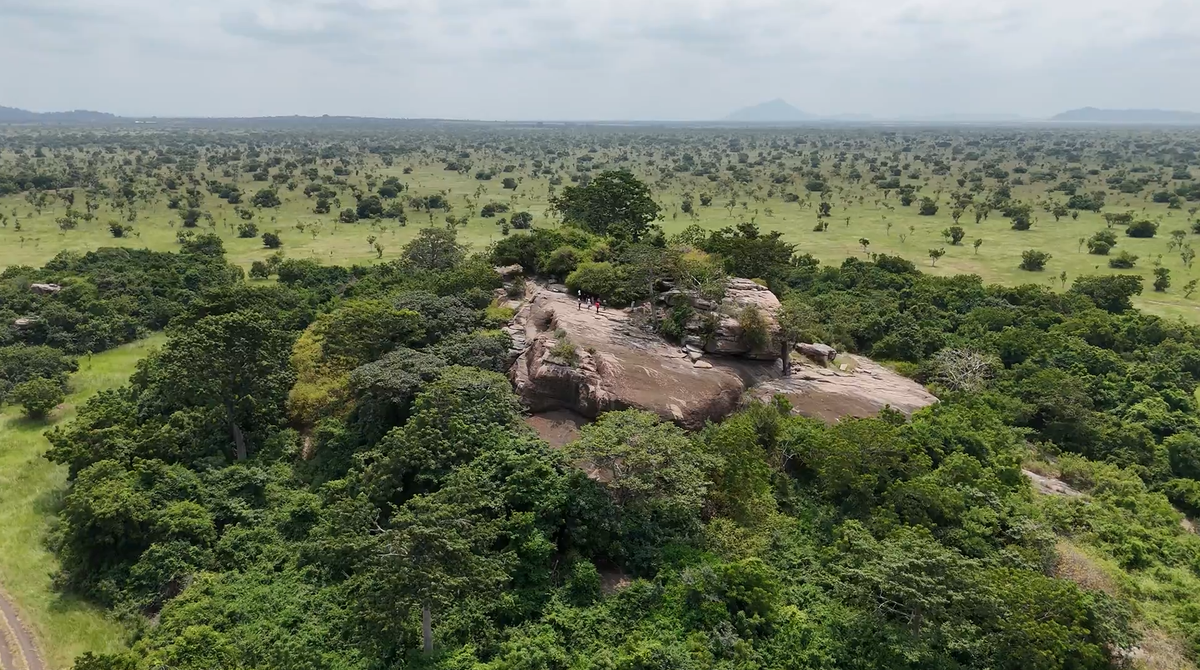
Our first impression of Shai Hills was disappointing. We passed ostriches and zebras and reached a small museum that did not immediately justify the journey.
Then we drove deeper into the reserve. The landscape became rockier. We climbed formations and entered caves connected to the history of the original Shai communities.
Our guide described how young girls could spend extended periods there learning domestic and social responsibilities from older women. The caves were not just geological spaces — they formed part of a cultural landscape shaped by education, tradition and expectations of adulthood.
The visit changed completely once the history entered the story.
Slowing down on Lake Volta
We ended the day on Lake Volta. After mountains, steps and caves, the boat trip asked almost nothing from us.
The water moved slowly. The light softened. A breeze crossed the lake. For once, no staircase waited ahead.
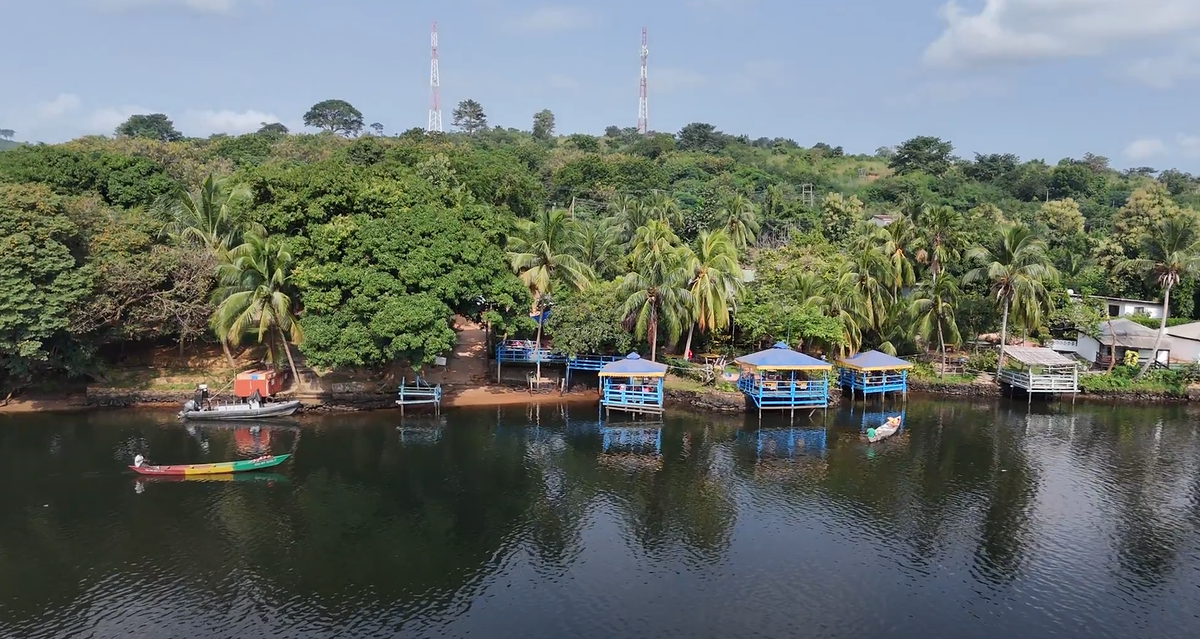
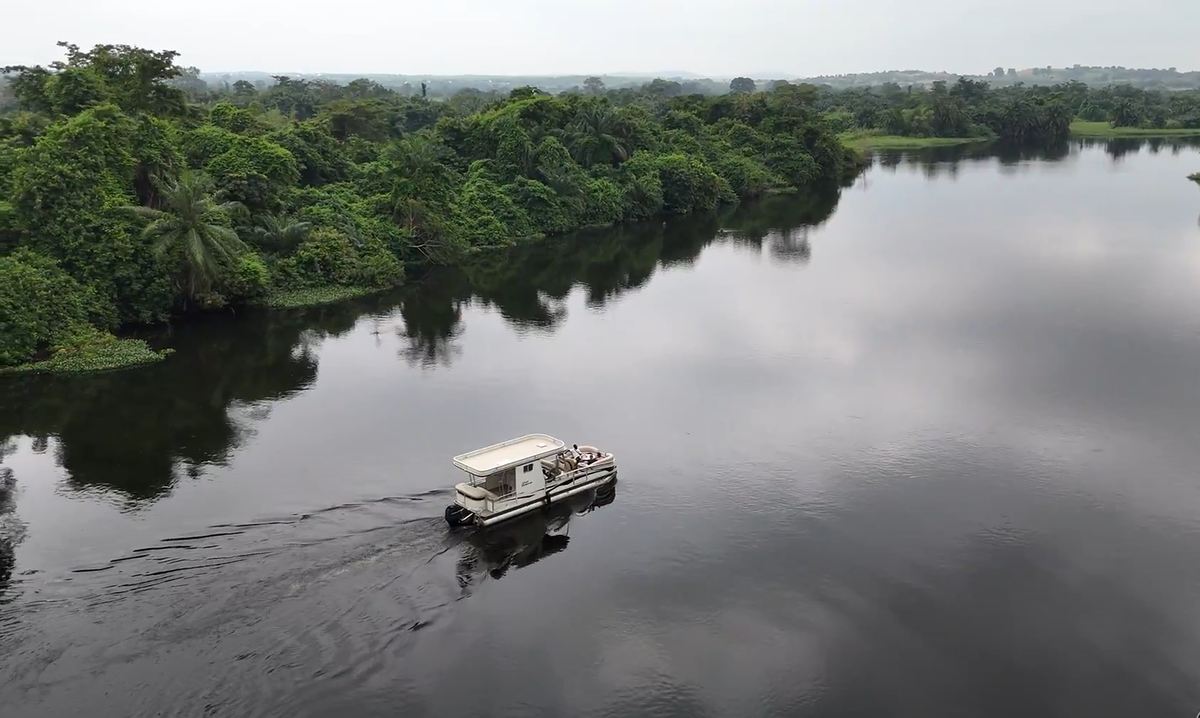
The calm exposed the main weakness in our planning. We had divided the region into separate excursions and repeatedly returned to Accra. A continuous route would have reduced the driving and allowed more time in the places themselves.
A better route through Volta
What the Volta Region left with us
The region gave us the most scenic part of the journey and the clearest planning lesson.
We should have stayed longer. We should have driven less. We should have booked a better room.
But the steep trails, cold water, quiet summit and caves remained stronger than the mistakes. The Volta Region had to be earned. That was part of its value.