
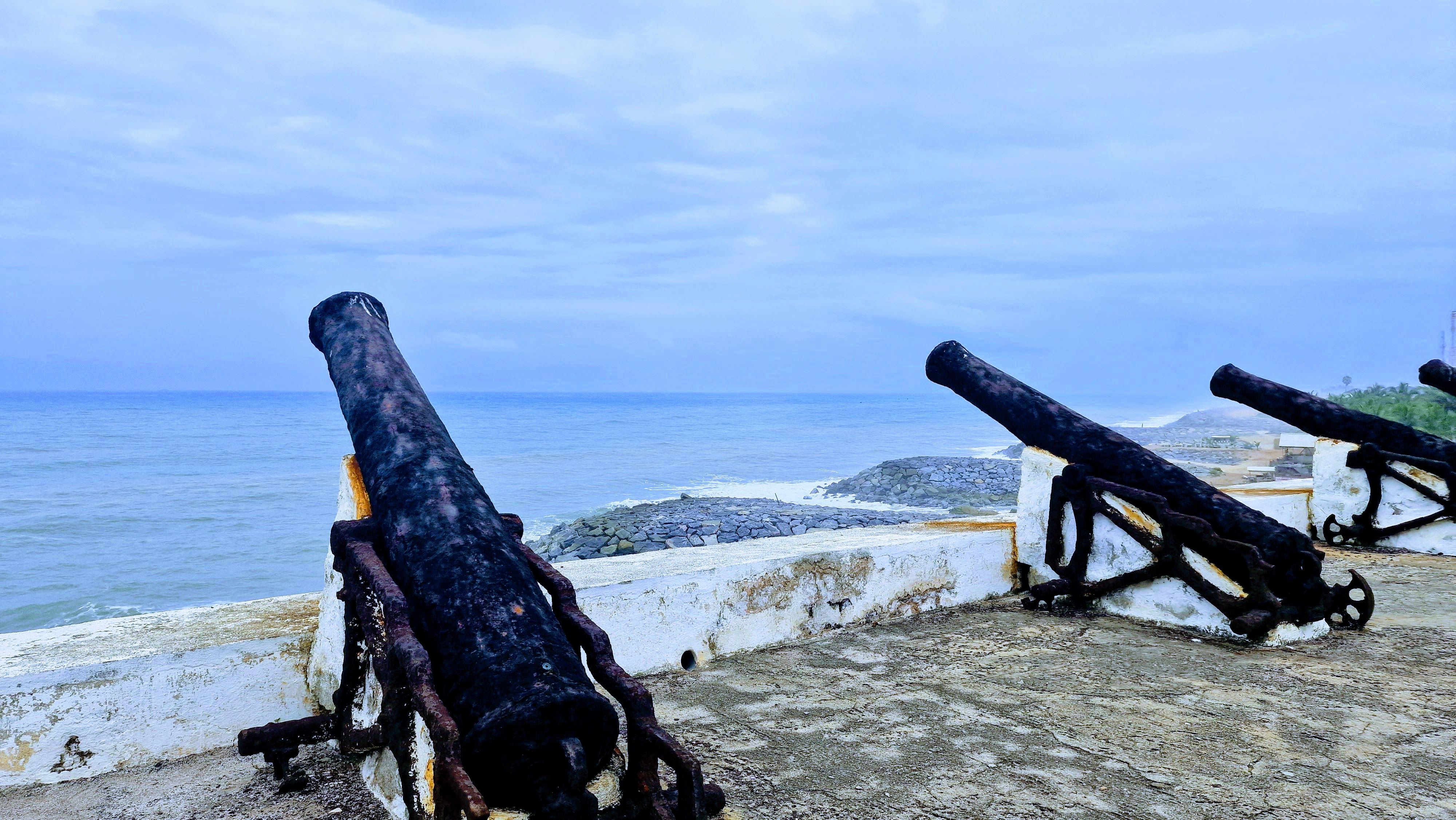
We left Accra early in the morning and drove west. The traffic gradually loosened and the capital disappeared behind us. Our destination was Ghana’s Central Region, where some of the country’s most important and difficult historic sites stand beside the Atlantic.
Our first stop was Cape Coast Castle.
Inside Cape Coast Castle
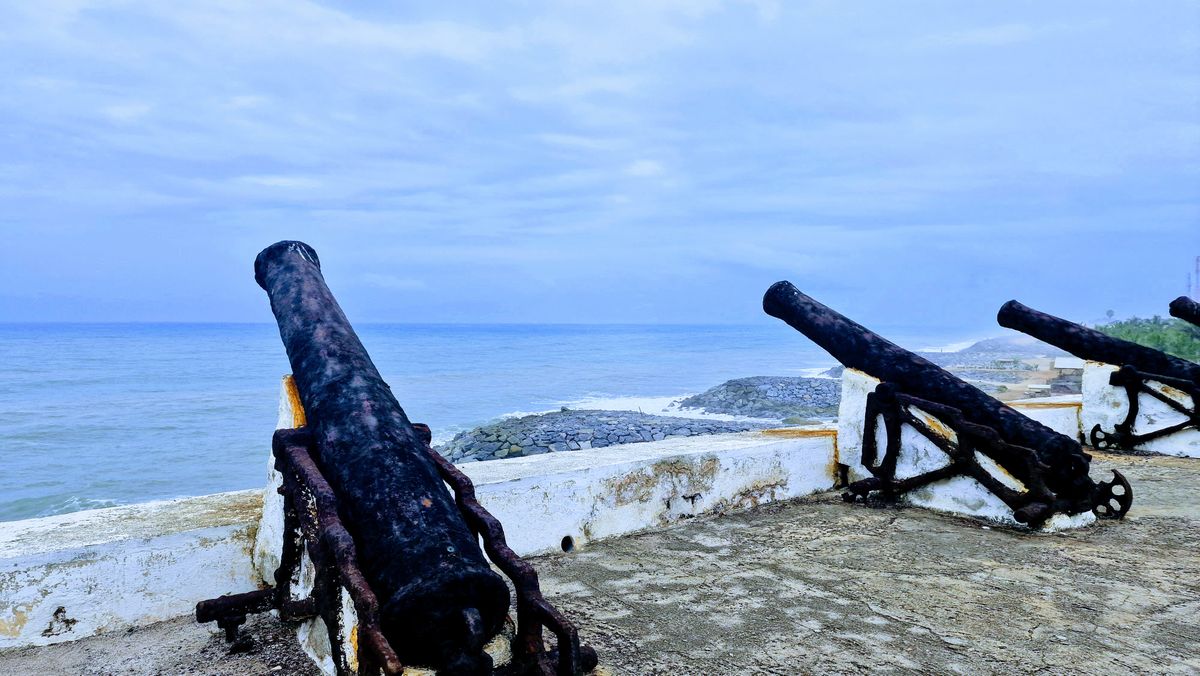
From outside, Cape Coast Castle almost looked serene. Its clean white walls faced the ocean, and in another context the setting might have appeared elegant.
That impression disappeared when we entered the dungeons. The rooms were dark, enclosed and heavy with history. Standing in the places where people had been imprisoned, brutalised and stripped of their humanity made the transatlantic slave trade impossible to treat as an abstract subject.
The facts mattered. The physical space made them harder to escape. You do not simply hear the history there. You feel its weight.
Why Elmina deepened the impact
We continued along the coast to Elmina. Fishing boats, orange rooftops and seabirds made the surroundings feel more active and colourful than Cape Coast.
Inside the castle, the fundamental story remained the same. Much of what we heard echoed the previous visit. Hearing it again did not reduce its effect — it made the scale of the system more difficult to ignore.
The two castles were not isolated places. They belonged to a much larger network of captivity, violence and forced departure. Outside, the harbour continued with daily life. Inside, the walls carried a history that could not be separated from the coast around them.
Crossing the canopy walkway at Kakum
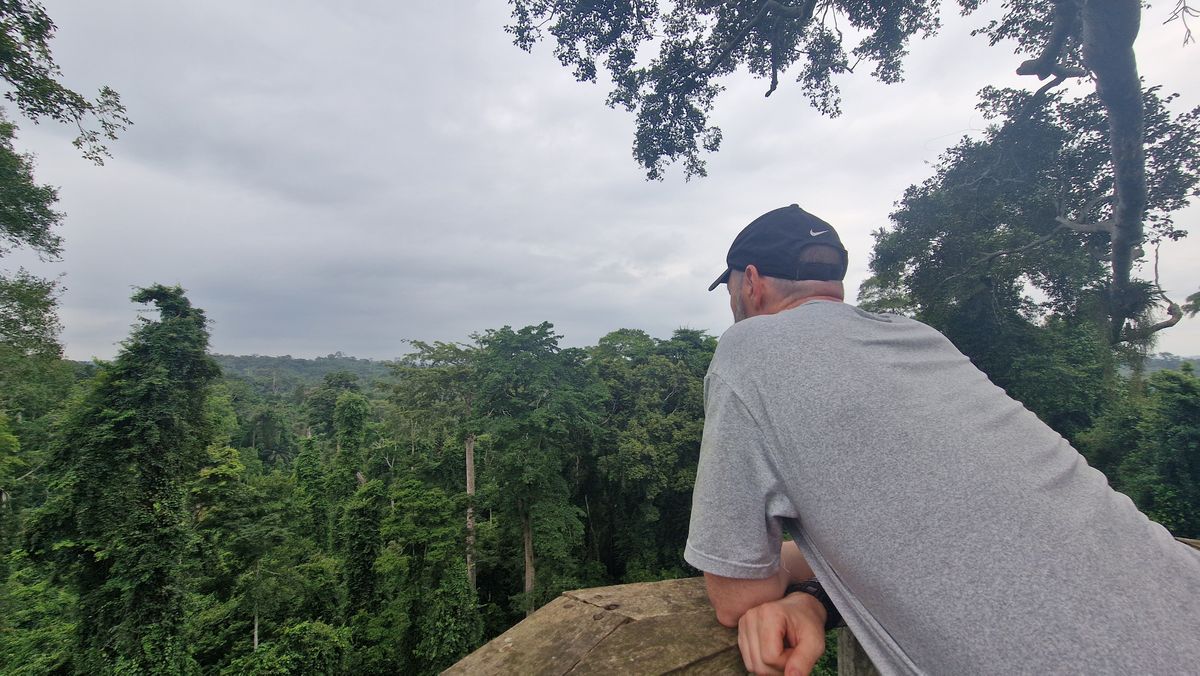
After the castles, Kakum National Park changed the rhythm completely. The park’s canopy walkway consists of narrow bridges suspended above the rainforest.
I expected to feel comfortable. Then the first bridge moved.
Lauren crossed with complete confidence. I held tightly to the ropes and tried to maintain the appearance of a capable adult. She almost skipped. I negotiated with gravity.
The view made the discomfort worthwhile. The rainforest stretched in every direction, a green surface broken only by the bridges and the people moving cautiously across them. For several minutes, the difficult history of the coast gave way to trees, height and movement.
I only screamed once.
What we missed along the coast
Only later did we understand how much remained beyond our route. Farther west lies Nzulezu, a community built on stilts and reached by canoe. The coast also contains quieter forts, beaches and forest areas that attract fewer visitors. We had even heard about a monkey forest.
We missed all of it.
That did not make the journey a failure. It showed us that Ghana’s coast had more to say than one day allowed.
Planning a similar coastal route
This part of Ghana suits travellers who want to combine heritage and nature. The castles are emotionally demanding. Kakum is physically lighter but introduces height and movement. Placing all three in one day creates variety, but also leaves little time for reflection.
What the coast left with us
The white walls, the dark dungeons and the open rainforest belonged to one day. They did not feel like one simple story.
The castles forced us to confront history. Kakum reminded us that the same country could shift its atmosphere completely within a few hours.
The coast was beautiful. It was also difficult. That tension made it impossible to forget.