
Arriving on Príncipe
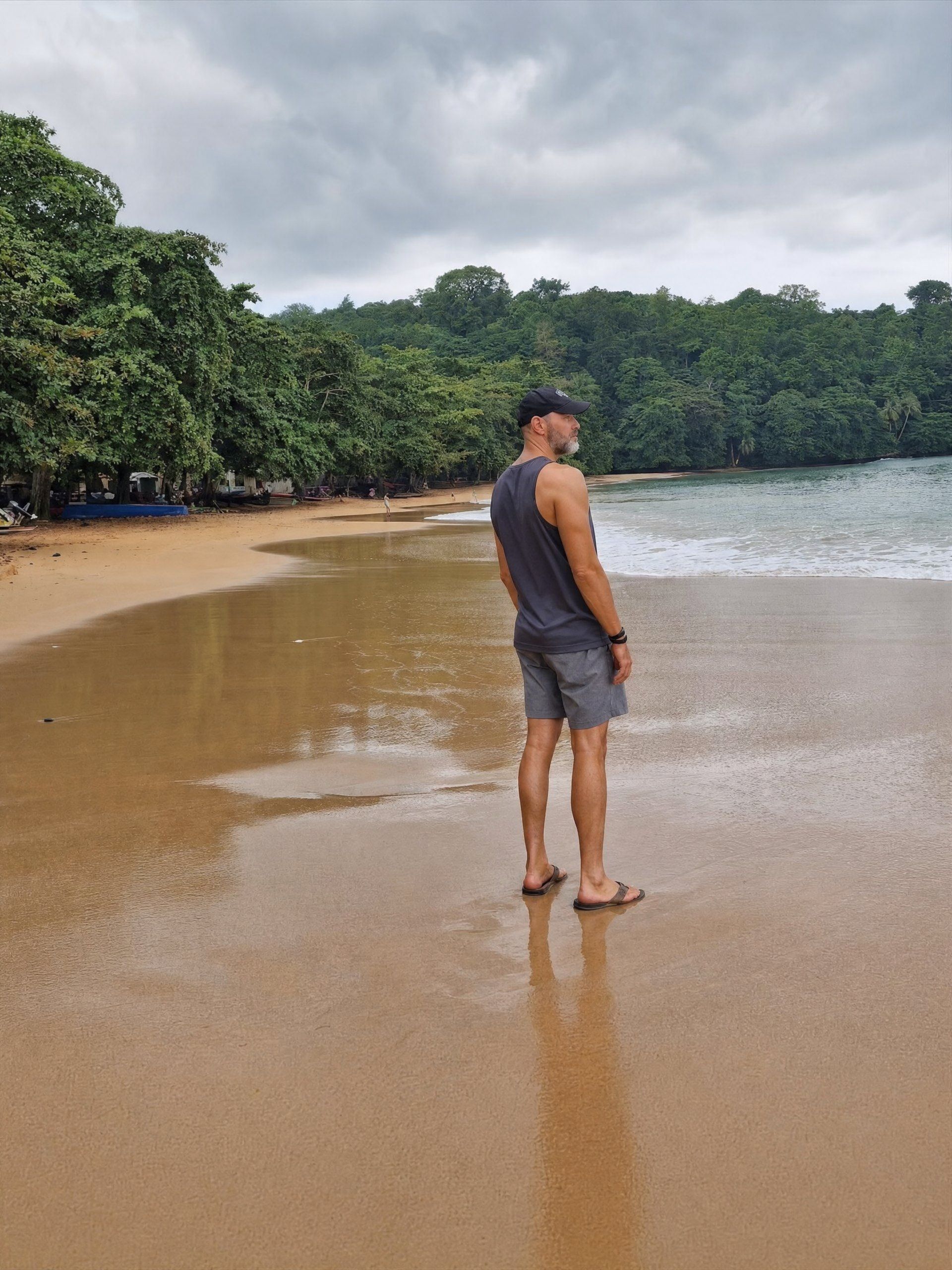
The flight from São Tomé takes less than an hour, yet when we landed everything seemed to shrink: fewer roads, fewer cars, fewer people and, apparently, very few tourists.
We would discover just how few over the next couple of days.
Príncipe beaches and viewpoints with Miro
We explored Príncipe with Miro, our local guide.
The island is small enough that distances never look particularly intimidating on a map, but having someone with a car who knows the roads makes life considerably easier. Public transport is limited, attractions are scattered around the island and some roads become increasingly adventurous once you leave the main routes.
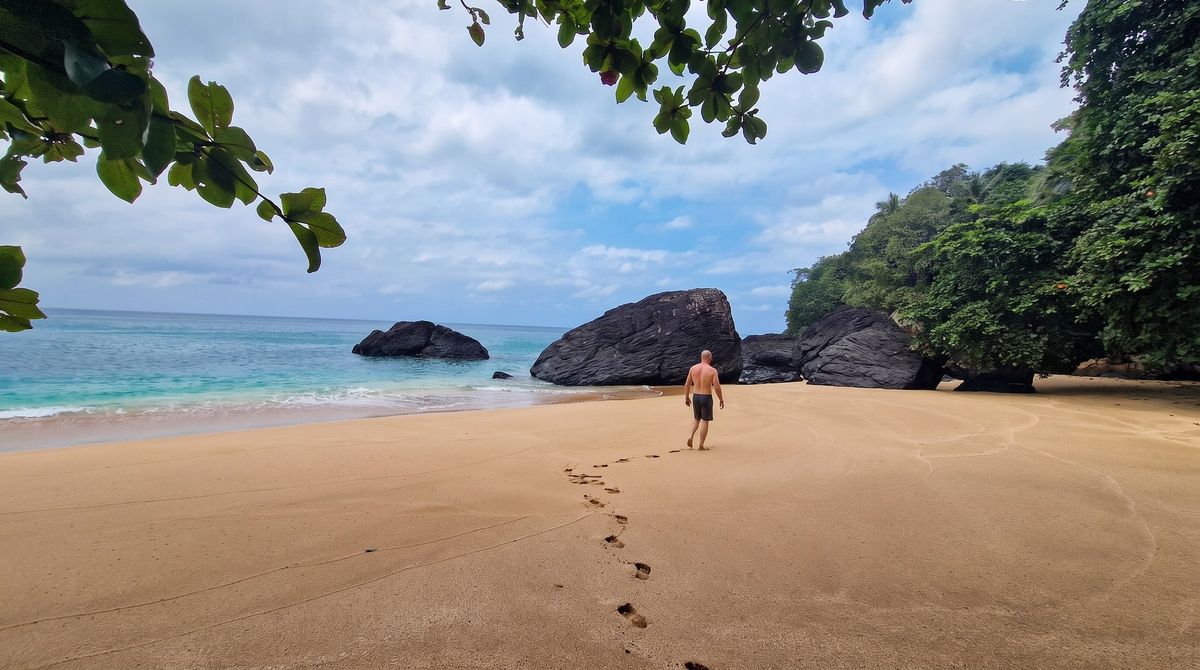
Our first day took us to places including Antennas, Banana Beach, Mount Daniel and Burra Beach.
The viewpoints and beaches were often completely empty.
Curiously, we did keep seeing the same tourists elsewhere. At the airport and in restaurants, familiar faces would appear again and again until it genuinely started to feel as if we knew every visitor on the island. Out at the beaches and viewpoints, however, we usually had the place to ourselves.
That contrast said a lot about how few travellers Príncipe seemed to receive.
Something else caught my attention almost immediately: the island looked remarkably well maintained.
Not polished in the sense of a resort. Most houses were simple, roads could be rough and infrastructure was basic. But around those houses, grass was often neatly cut, paths were clean and there was surprisingly little litter. It was something we kept noticing across the island.
Príncipe felt modest, but rarely neglected.
And then there were the dogs.
They were everywhere, and almost all of them seemed to have been produced from exactly the same template: something between a golden retriever and Dobby the house-elf. Once we noticed it, we could not stop seeing them.
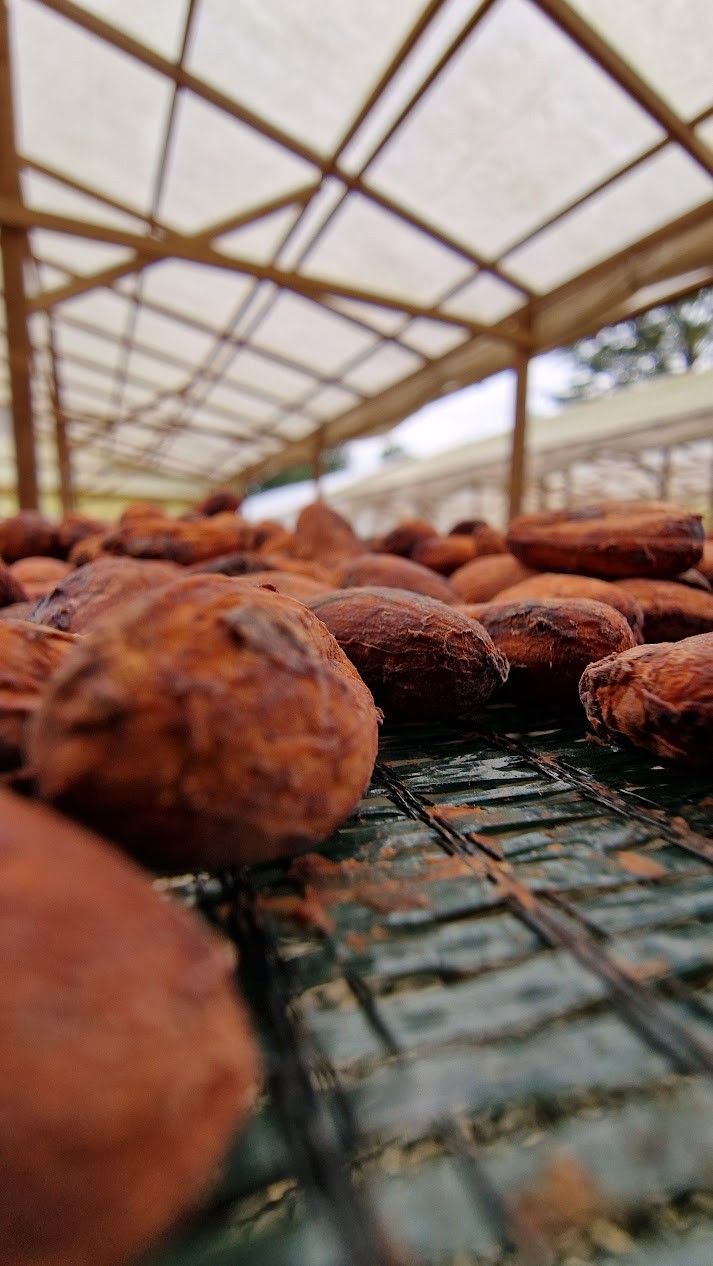
We also got to taste cacao straight from the fruit. The white pulp around the beans was surprisingly sweet and fresh. One tip: if you ever get the chance to try it, don’t make the same mistake I did — avoid biting into the bean itself. Your taste experience will be much better for it.
Meals were generally simple and local. One I particularly remember was locally caught sailfish with rice and fried breadfruit, which felt exactly like the kind of meal you would expect on a small tropical island.
Roça Sundy and Príncipe’s past
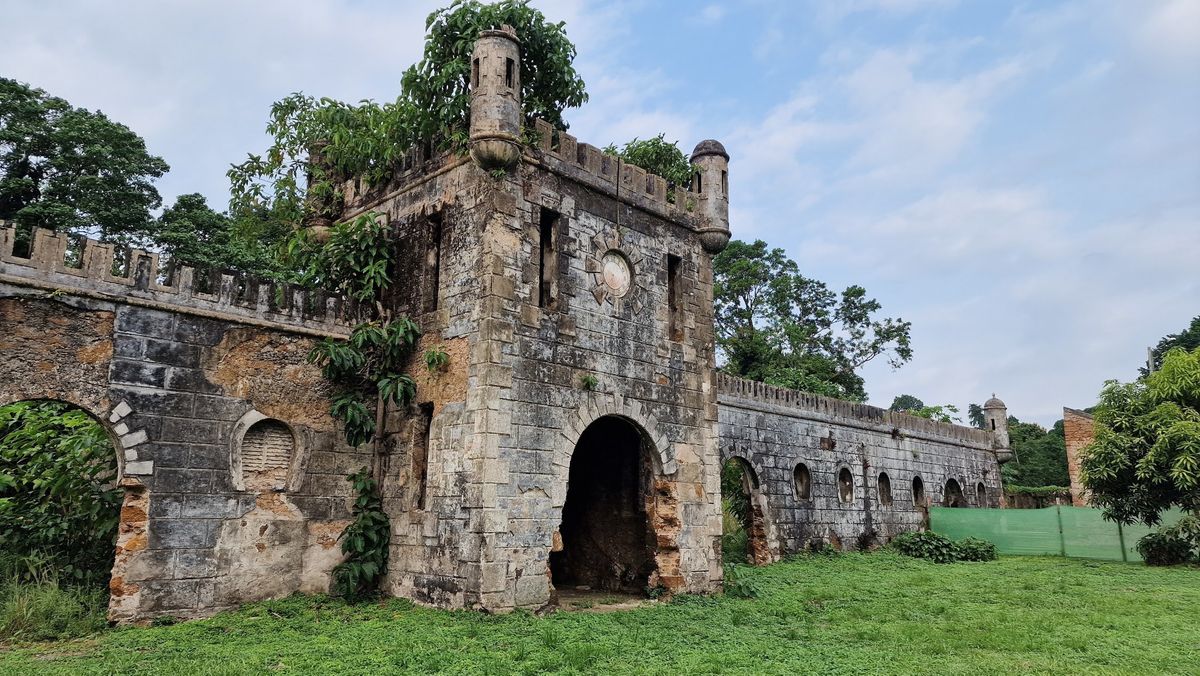
The old plantation estates, or roças, are among the places where Príncipe’s history is most visible.
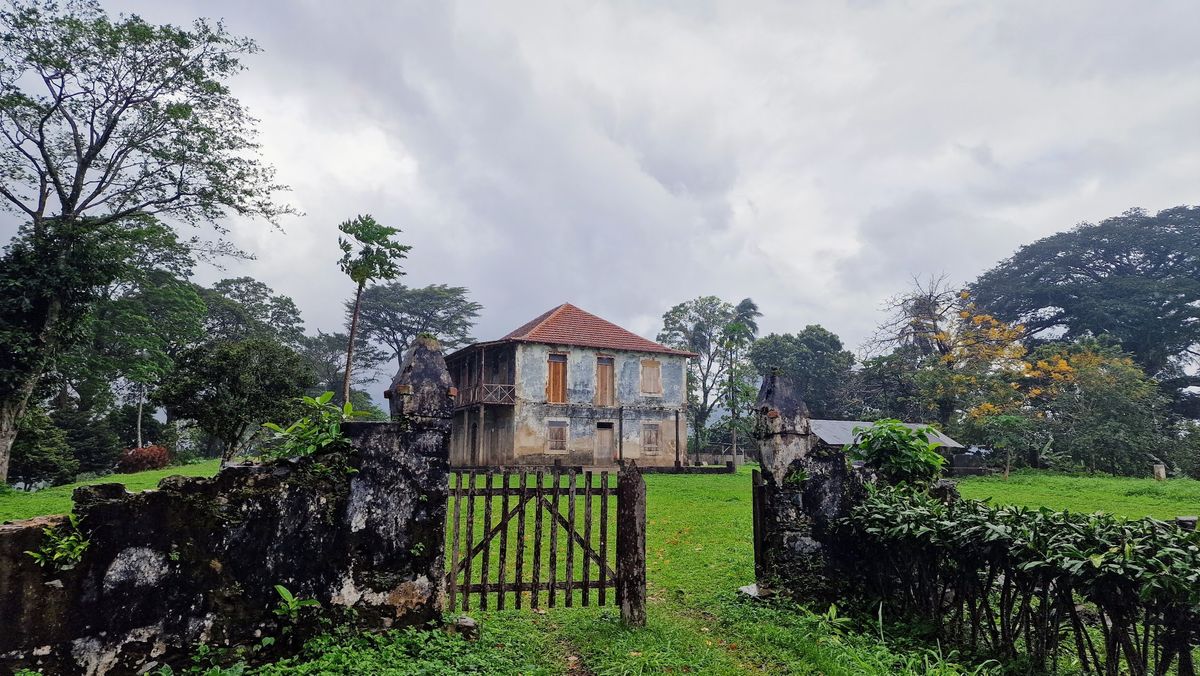
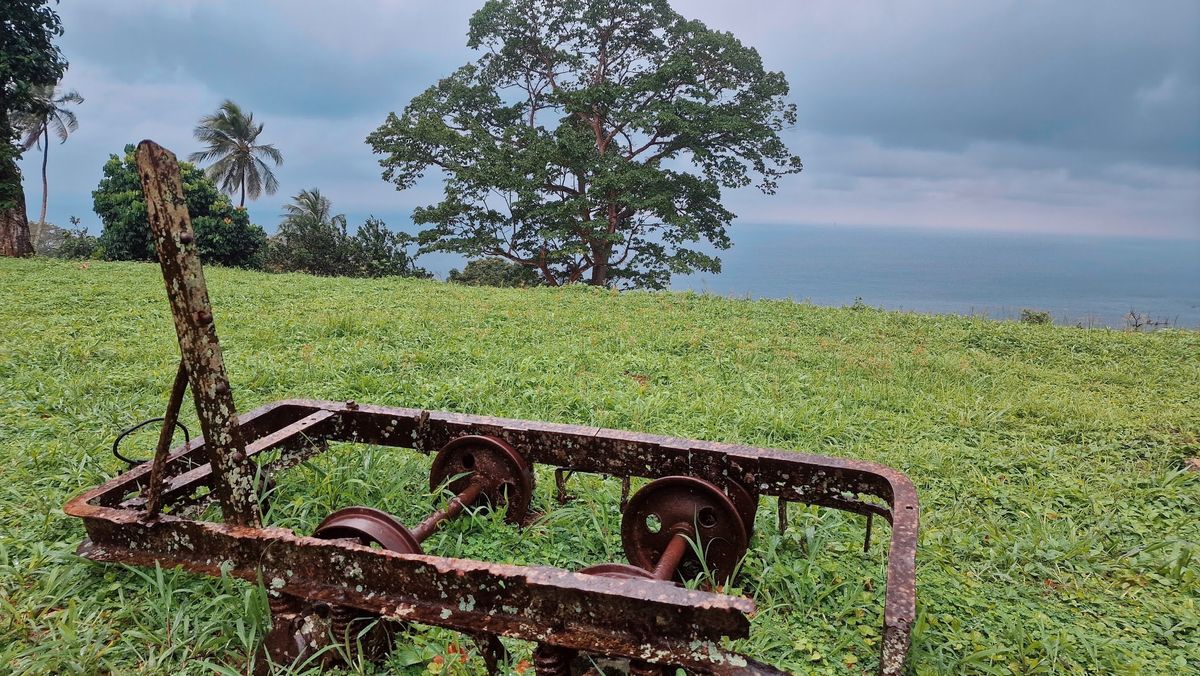
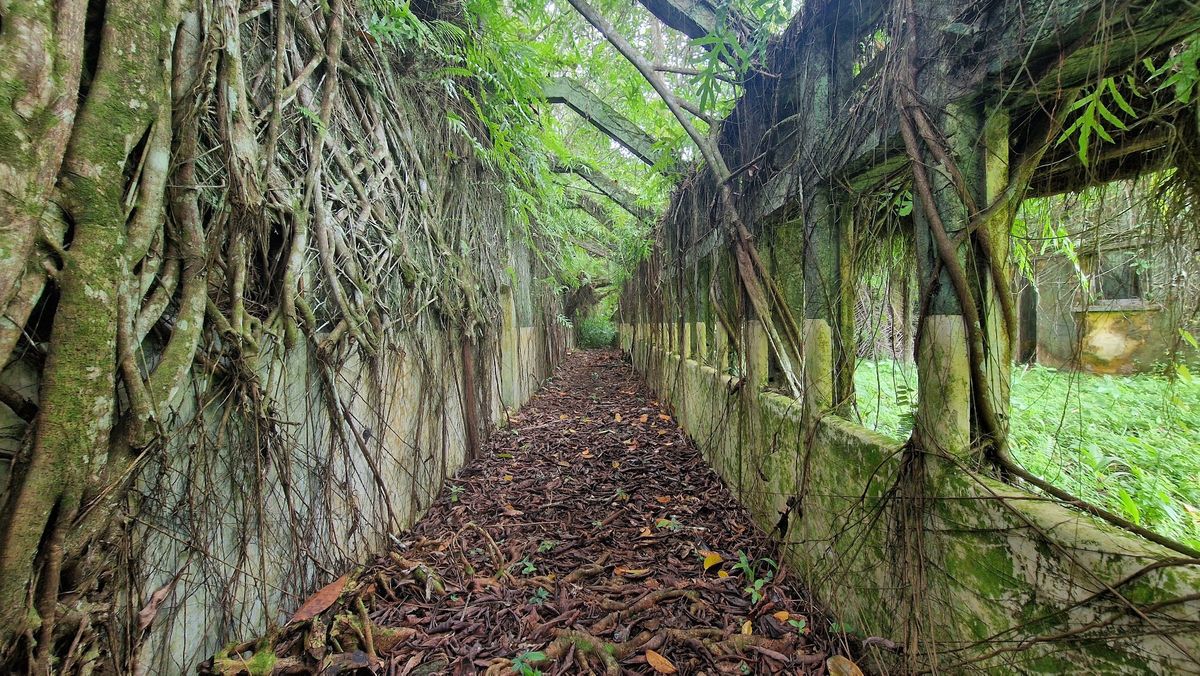
Some of the buildings still hint at how imposing these estates must once have been, but time and the tropical climate are gradually reclaiming them. Walls crack, roofs collapse, vegetation pushes into windows and courtyards, and structures that once projected wealth and permanence slowly lose their battle against moisture, heat and an all-consuming landscape.
There is a strange beauty in that decay, even though the history behind the plantations is anything but romantic.
At Roça Sundy, however, part of that story has taken a very different turn. The main building has been beautifully restored and turned into a luxury hotel, showing just how differently Príncipe can be experienced if your budget allows it.
The place also has an unexpected connection to Albert Einstein.
In 1919, British astronomer Arthur Eddington observed a total solar eclipse from Príncipe as part of an experiment designed to test a prediction from Einstein’s theory of general relativity. By measuring how starlight appeared to bend near the Sun, the observations helped provide one of the first famous confirmations of Einstein’s theory.
It is quite a combination for one place: colonial plantation history, tropical decay, a luxury hotel and a small but significant chapter in the history of modern physics.
When Miro fell ill
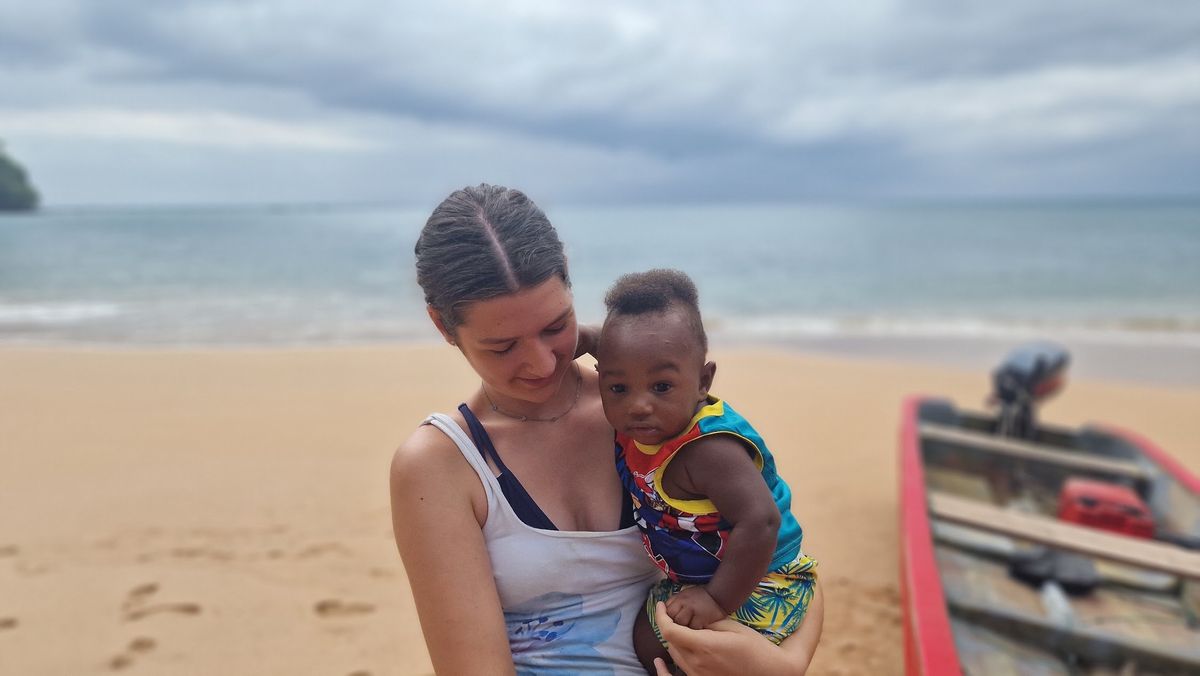
Unfortunately, after our first day Miro became ill and Zezé took over.
Zezé was a teacher, and travelling around the island with him sometimes felt like travelling with someone who knew absolutely everyone.
Our first excursion with him was supposed to be spent mostly on and around the water. The plan was to follow part of Príncipe’s coastline by boat, visit a fishing village, stop for some snorkelling, have lunch on a beach and then return later in the afternoon.
The coastline itself was beautiful, with dense vegetation dropping towards the sea and small settlements appearing between long stretches of green.
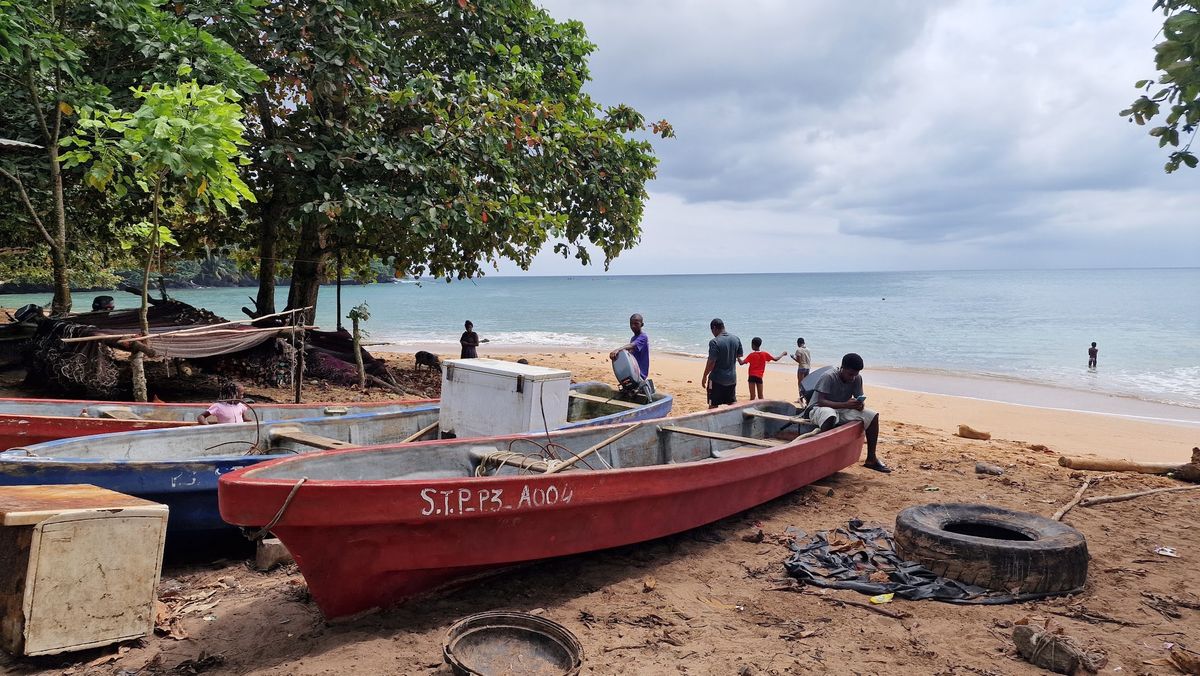
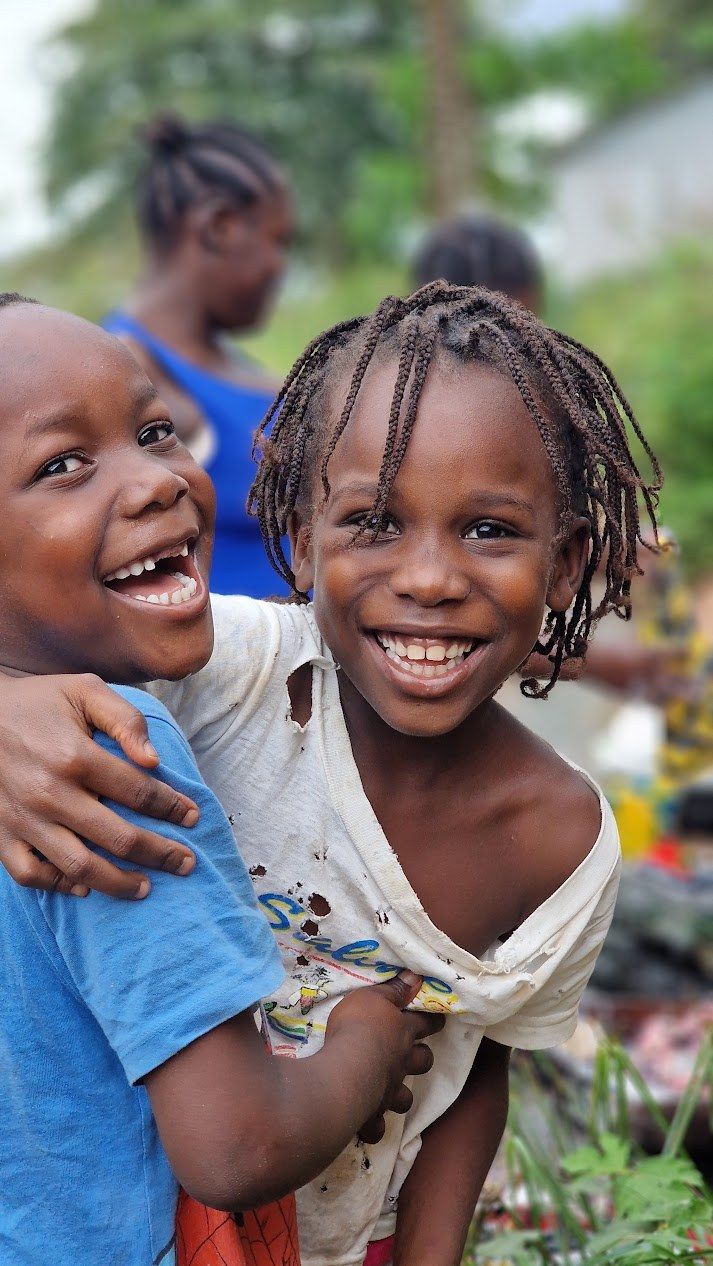
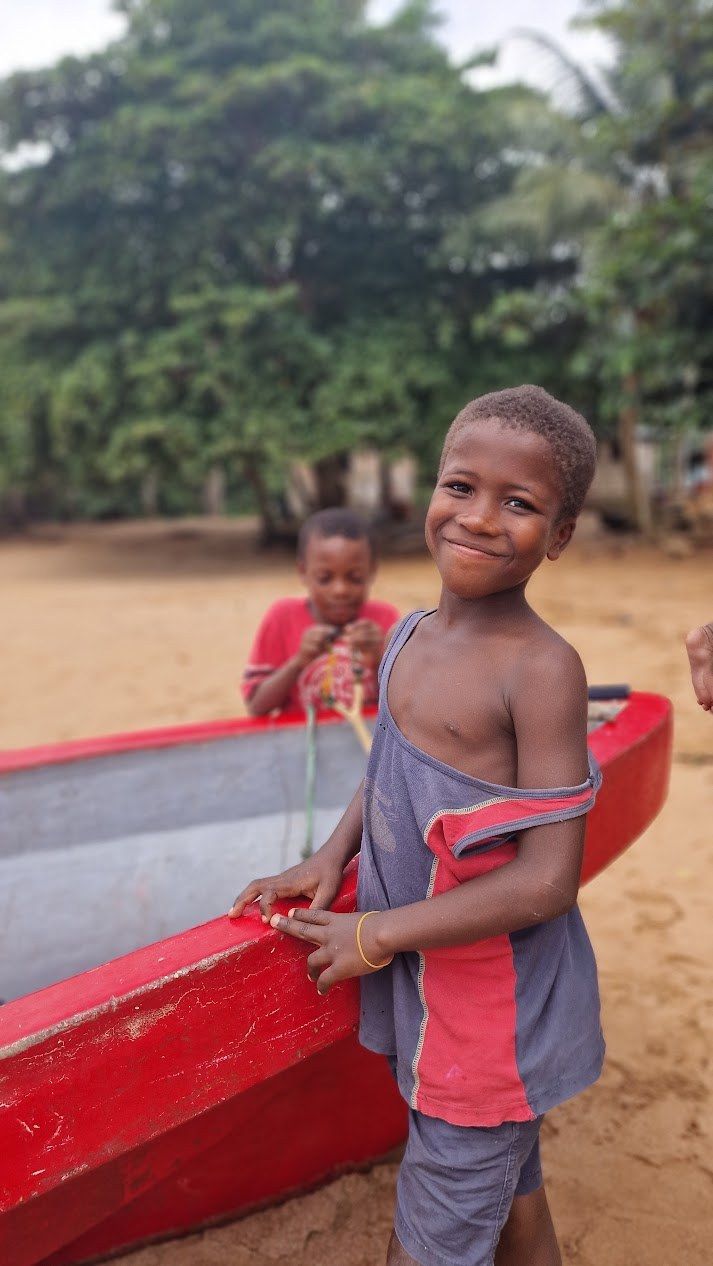
When we reached the fishing village, the atmosphere was noticeably rougher than in many of the other places we had visited. Wooden boats were pulled onto the sand, houses stood immediately behind the beach, children gathered around us and animals wandered freely between everything.
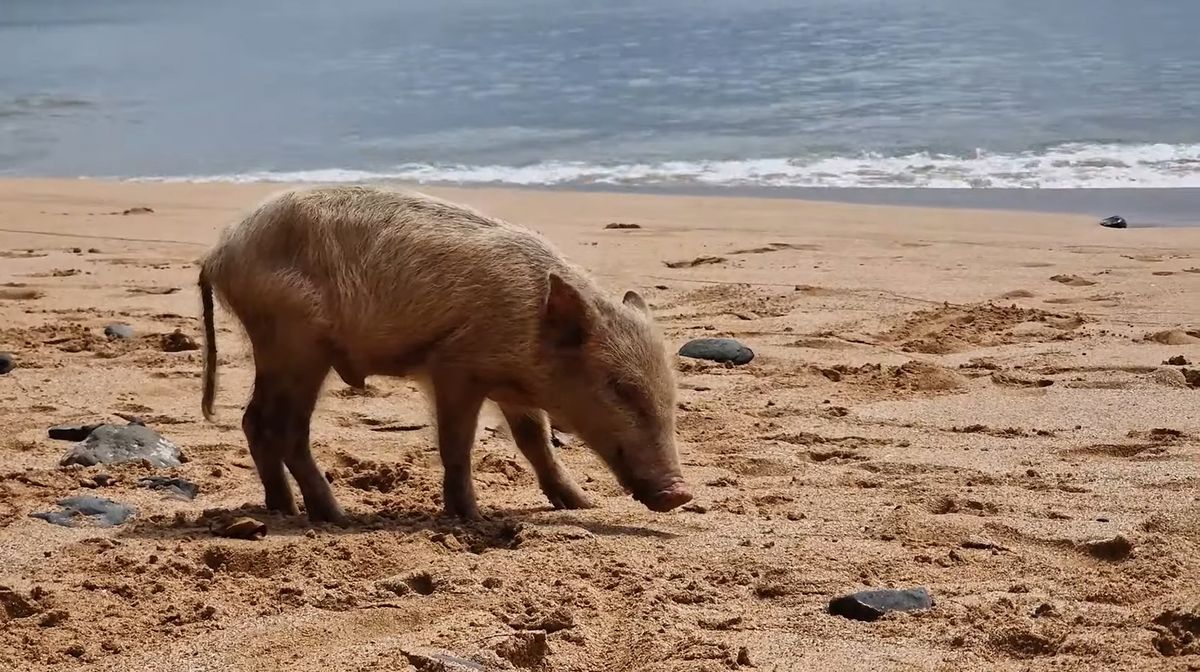
I had seen plenty of animals in unexpected places while travelling, but a pig walking around on a tropical beach was a first.
The day did not entirely unfold as intended. The man operating the boat had apparently not been informed about every part of the programme, so the planned snorkelling stop and beach lunch never happened.
We still enjoyed seeing the coastline and visiting the village, but we were left with the feeling that the experience could have been considerably richer with better coordination.
On the way back, the weather changed quickly. Wind and rain arrived, the sea became much rougher and what had started as a relaxed coastal trip turned into a considerably more exciting ride through large swells.
That part was simply bad luck, but it made us wonder whether the time of year we had chosen was really the best one for Príncipe.
Oquê Pipi Waterfall, almost
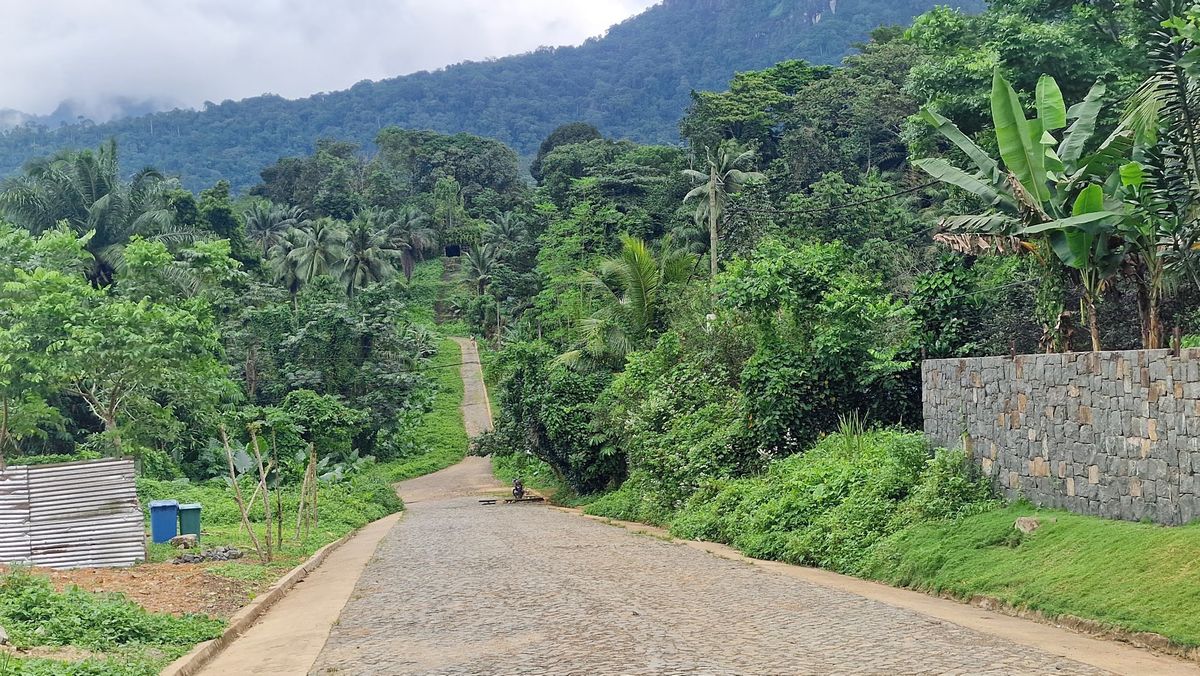
The following day we planned to hike towards Oquê Pipi Waterfall (often written Oquepipi), but repeated rain had made the trail increasingly muddy and difficult.
Eventually it became clear that continuing was not sensible, so the original plan had to be abandoned.
Zezé handled the change extremely well. He improvised, took us to Roça Terreiro Velho, the plantation once linked to Claudio Corallo’s chocolate, which we found completely deserted and in total decay, and later continued to Porto Real, where we visited the remains of the old hospital.
At one point he told us that he had actually been born there.
That small detail changed the way we looked at the building. What initially appeared to us as another decaying structure from the past was part of the personal history of the man standing beside us.
It also summed up the value of travelling with someone local. Even when the original plan failed, Zezé still managed to turn the day into something worthwhile.
Best time to visit Príncipe
Weather influenced our stay more than we expected. We had repeated rain, rough conditions at sea and trails that became too muddy to complete. None of that ruined the trip, but it did affect several activities.
For hiking and exploring, the official tourism board recommends the drier Gravana season from June through September, when trails are generally more accessible. Príncipe is tropical, though, so rain is always possible and conditions can change quickly. If hiking, snorkelling and boat trips are central to your plans, it is worth paying close attention to the season while still leaving room for the weather to surprise you.
A little Portuguese goes a long way
Language was another part of travelling on Príncipe that we underestimated.
English was limited, especially on Príncipe, but the language barrier never felt unfriendly. People were consistently helpful and willing to find a way to communicate. More than once, someone simply pulled out a phone and opened Google Translate so we could understand each other.
It worked surprisingly well, and it also made us realise how useful even a small amount of Portuguese would have been.
You can absolutely travel there without speaking the language, but a basic vocabulary would make everyday conversations, changed plans and small interactions noticeably easier.
The Príncipe we remember
What stayed with us most was not one particular beach or viewpoint, but the overall feeling of the island.
The empty beaches, the same handful of tourists reappearing in restaurants and at the airport, the neatly maintained surroundings, the Dobby-shaped dogs, a pig wandering along a tropical beach, the faded grandeur of old plantations slowly being absorbed by the jungle, Zezé greeting people everywhere we went, a boat journey that started calmly and ended in rain and heavy waves, and plans being rewritten because the weather had other ideas.
Some things could have been organised better, while others were simply bad luck, but Príncipe still left us with the feeling that we had reached somewhere genuinely small and self-contained.
For a few days, it really did feel as though everyone knew everyone else — including, eventually, the tourists.
Practical notes
- Getting around
- A local guide or driver makes exploring Príncipe considerably easier.
- Language
- English is limited; even basic Portuguese helps, although local people were consistently willing to bridge the gap with Google Translate.
- Weather
- The time of year matters if hiking, snorkelling and boat trips are central to your plans.
- Tourism
- Visitor numbers felt extremely low during our stay. We repeatedly saw the same tourists in restaurants and at the airport, while beaches and viewpoints were often empty.